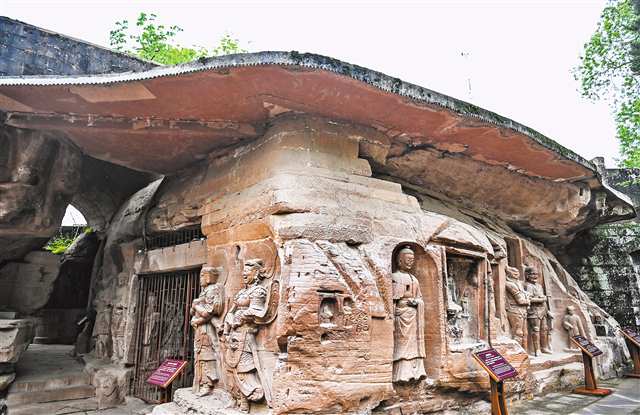
Shimenshan Rock Carvings
Overview
Located in the Shimenshan region of Chongqing, the Shimenshan Rock Carvings represent a significant collection of ancient stone carvings and inscriptions, reflecting the region's rich cultural, religious, and artistic heritage. As the largest integrated Buddhist and Taoist statuary area within the Dazu Rock Carvings, Shimenshan is particularly renowned for its distinctive Taoist sculptures. These carvings, etched into the natural rock faces of the Shimenshan mountain range, stand as a testament to the artistic skill and spiritual devotion of past civilizations. Invaluable cultural relics, they offer insights into the historical, social, and religious practices of their creators, showcasing intricate details, diverse themes, and remarkably enduring craftsmanship.
History
The Shimenshan Rock Carvings project commenced in the Northern Song Dynasty (1094) and reached completion in the Southern Song Dynasty (1151), a period extending over approximately fifty years. Subsequent periods saw smaller embellishments added. The site once featured a grand temple and a bustling market at the mountain's foot and functioned as a school. During the Southern Song Dynasty, local followers raised funds to sculpt the celebrated "Ten Holy Guanyin Grotto," and the names of those generous contributors are preserved on the grotto's walls to this day.
Key Characteristics and Features
The Shimenshan Rock Carvings are renowned for their artistic excellence and the diversity of their themes. The carvings include a wide range of subjects, such as religious figures, mythical creatures, historical events, and scenes from daily life. Many of the carvings are accompanied by inscriptions in ancient Chinese script, which provide context and enhance their historical significance.
One of the most striking features of the carvings is their intricate detailing. The artists employed advanced techniques to create lifelike depictions of their subjects, paying close attention to proportions, expressions, and textures. The carvings also demonstrate a deep understanding of perspective and spatial arrangement, which adds to their visual impact.
The site is also notable for its integration with the natural landscape. The carvings are often situated in harmony with the surrounding environment, utilizing the natural contours and features of the rock faces to enhance their aesthetic appeal. This integration reflects the traditional Chinese philosophy of harmony between humans and nature, which is a central theme in both Taoism and Confucianism.
Major Components and Structure
The Shimenshan Rock Carvings are spread across multiple sites within the Shimenshan mountain range. Each site contains a unique collection of carvings, often organized around a central theme or purpose. Some of the most prominent sites include:
-
The Buddha Grottoes: This section features a series of carvings dedicated to Buddhist deities and bodhisattvas. The grottoes are adorned with intricate reliefs depicting scenes from Buddhist scriptures, as well as statues of the Buddha in various poses.
-
The Taoist Sanctuary: This area is characterized by carvings that reflect Taoist philosophy and mythology. It includes depictions of Taoist immortals, celestial beings, and symbolic animals such as dragons and phoenixes.
-
The Confucian Pavilion: This site contains carvings related to Confucian teachings and values, including images of Confucius and his disciples, as well as inscriptions of Confucian texts.
-
The Historical Panels: These carvings depict significant historical events and figures, providing a visual record of the region's history and culture.
-
The Naturalistic Reliefs: This section features carvings of natural landscapes, animals, and plants, showcasing the artists' appreciation for the beauty of the natural world.
Significance and Cultural Impact
The Shimenshan Rock Carvings hold immense cultural, historical, and artistic significance. They serve as a valuable resource for understanding the religious and philosophical beliefs of ancient Chinese society, as well as the artistic techniques and styles of different historical periods. The carvings also provide insights into the social and political history of the region, as many of the inscriptions include references to historical events, figures, and local customs.
From an artistic perspective, the carvings are a testament to the skill and creativity of ancient Chinese artists. They demonstrate a high level of craftsmanship and an ability to convey complex ideas and emotions through visual art. The integration of the carvings with the natural landscape also reflects the traditional Chinese aesthetic ideal of harmony between humans and nature.
The site has become an important destination for scholars, historians, and tourists, attracting visitors from around the world. Designated a National Key Cultural Relics Protection Unit in 1996, the site was inscribed on the UNESCO World Heritage List in 1999 as part of the Dazu Rock Carvings.
Conservation and Challenges
The preservation of the Shimenshan Rock Carvings poses significant challenges due to natural and human factors. Weathering, erosion, and biological growth, such as moss and lichen, have caused damage to some of the carvings over time. Human activities, including tourism and urban development, have also posed threats to the site.
Efforts to preserve the carvings have included measures such as cleaning and stabilizing the rock surfaces, controlling vegetation growth, and restricting access to certain areas to prevent further damage. Advanced technologies, such as 3D scanning and digital modeling, have been employed to document and study the carvings, providing valuable data for conservation efforts. Photo Gallery(1 picture)CategoriesCultural HeritageTagWorld Heritage in ChinaTangible Cultural HeritageCatalogue1. Overview2. History3. Key Characteristics and Features4. Major Components and Structure5. Significance and Cultural Impact6. Conservation and Challenges- - - []








